

I have spent considerable time reflecting on the challenges that continue to confront our nation.
In physics, the efficiency of a machine is defined by its ability to lift maximum load with minimum effort. Over the decades, Uganda has seen tremendous, well-meaning inputs to transform our society.
Yet, our developmental output remains disproportionately low. The effort could have yielded a far greater load if our institutional machine were efficient.
Whether one agrees or disagrees, His Excellency Yoweri Kaguta Museveni is an exceptionally intelligent, hardworking, and disciplined leader. In football it would be the exclusive class of Pele,
Maradona, Messi and C. Ronaldo who appear once in a while. Within the limits of his human abilities, President Museveni has consistently sought to transform our society through an array of macro development programmes and tools.
Having personally traveled to 41 out of 54 African countries, I can confidently state that Uganda is genuinely among the top 15 nations to live in on the continent. The World Bank affirms this, ranking Uganda 13th in Africa by Nominal Gross Domestic Product (GDP), positioning us firmly within the top tier of mid-sized African economies.
Without a doubt, our foundational building blocks—Peace, Security, Infrastructure, essential Services, Pan-Africanism, Regional Integration, and deliberate efforts to increase Household Income—cannot be separated from the person of President Museveni over the last 40 years.
Throughout our modern history, some exceptional individuals have leveraged their vision, expertise, and leadership to contribute significantly to this national progress.
All that said and done, Uganda remains uniquely gifted by nature. We are blessed with abundant natural resources, a highly youthful population, vibrant entrepreneurial energy, and remarkable resilience. Yet, despite these natural and structural advantages, we find ourselves grappling with the same developmental challenges decade after decade. This frustrating reality raises a difficult
but necessary question: Where do we miss the mark?
One of our greatest contemporary challenges is that we have gradually become a society increasingly influenced by narratives rather than empirical facts. Opinions frequently carry more weight than evidence. Social media personalities, digital influencers, and content creators have increasingly become default authorities on complex socio-economic subjects that actually require
years of rigorous study, field experience, and deep technical expertise. As a result, public discourse is driven by emotion rather than reason, popularity rather than competence, and perception rather than reality.
Nations do not develop because they possess the loudest voices. They develop by cultivating the best ideas and empowering the most capable minds to implement them. The modern world is a ruthless competition of knowledge, innovation, and ideas. Rapidly progressing countries in vest heavily in research, technology, human capital, and evidence-based decision-making. They
understand that their greatest natural resource is not the oil beneath their soil, nor their minerals, nor their land—it is their people.
Uganda has no shortage of brilliant minds. Our collective failure is that we have not engineered a system capable of consistently identifying, nurturing, protecting, and deploying this talent for
national development.
The core problem is that no nation should depend entirely on the isolated brilliance of a few individuals. Strong nations institutionalize excellence. They build durable, predictable systems that continuously produce capable leaders, innovators, researchers, entrepreneurs, and problem solvers. Unfortunately, many of our public institutions were simply not designed with this objective in mind.

Too often, positions of public influence are viewed primarily as opportunities for personal advancement rather than platforms for national transformation. Merit routinely competes with patronage. Technical expertise is sidelined by raw politics. In many cases, highly talented individuals spend more time navigating fragile political dynamics than solving actual physical or economic problems. This counter-productive environment forces brilliant Ugandans to either become discouraged, seek opportunities abroad, or choose the total safety of silence—resulting in a catastrophic hemorrhage of national potential.
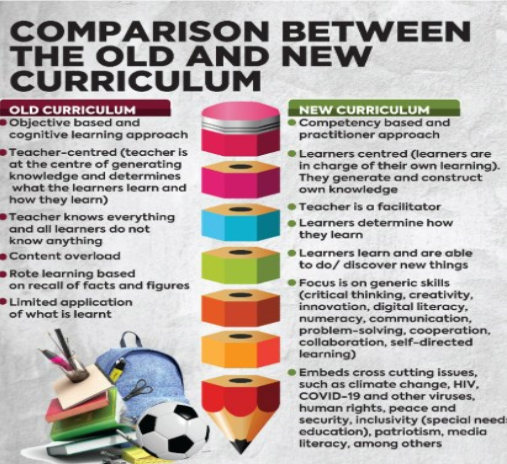
May be until recently, our education curriculum clearly illustrated this structural mismatch. For decades, success has been measured by examination performance, academic certificates, and the basic ability to secure employment. While formal education remains essential, its ultimate purpose must be to develop critical thinkers, creators, and solution-driven innovators. Universities should be cauldrons of research and solution development, yet research remains one of the least funded sectors in our national development framework.
This creates a fundamental contradiction: we expect unique solutions to uniquely Ugandan challenges, but we invest almost nothing in generating those solutions ourselves. China will not solve Kampala’s traffic gridlock. Europe will not solve our informal housing challenges. America will not solve our agricultural productivity gaps. While we can study international experiences, sustainable solutions must be engineered by people who live and understand Uganda’s social realities.
Unfortunately, a weak connection persists between academia, government, industry, and investment. Every year, our universities produce thousands of graduates and numerous innovative ideas. Yet very few of these concepts are ever transitioned into commercially viable products, scalable businesses, or public policy solutions. Many brilliant student innovations die in classrooms
because no structured pathway exists from ideation to implementation. This is not a failure of in telligence but our wrong diagnosis leading to wrong prescription.

Our political culture also deserves honest dissection. Politics plays an essential role in providing national direction, representation, and accountability. However, politics should create the fertile soil where technical solutions flourish; it should not replace expertise itself. Across Uganda, political competition is increasingly characterized by propaganda, personal attacks, blackmail, deep suspicion, and the base struggle for political survival. Consequently, highly competent professionals avoid public engagement because they perceive the environment as hostile to objective, data-driven debate. The nation loses whenever expertise retreats from public discourse.
The challenge, therefore, is not a lack of talent. It is the complete absence of institutional platforms where talent, expertise, and ideas can be safely mobilized, protected, and transformed into national action. To be fair, Uganda has produced exceptional sons and daughters in science, engineering, medicine, agriculture, technology, business, sports, and public administration many
making waves both at home and abroad. The issue is not whether potential of human capital exists. The issue is whether our institutions are engineered to identify that brilliance and ability, support it, and deploy it effectively.

If Uganda is to unlock its full potential, seven strategic interventions deserve immediate consideration:
- Redesign the Education System: Identify potential, talent and gifted learners early and provide specialized development pathways for innovation, science, technology, entrepreneurship, and creative problem-solving, following models seen in Japan, Singapore and Finland.
- Prioritize Research & Development (R&D): Substantially increase national research funding and link it directly to specific national development goals, incentivizing universities and research institutions to solve Ugandan community and industrial problems.
- Elevate National Planning: Empower long-term national planning bodies with the statutory authority, independent resources, and technical expertise required to coordinate development priorities across sectors, insulated from short-term political interference. The Planning should be an independent full cabinet ministry and well resourced.
- Establish a National Ideas and Innovation Forum: Create an institutionalized platform that regularly brings together researchers, professionals, entrepreneurs, academics, and policymakers to debate and design practical solutions where expertise matters more than political affiliation.
- Bridge the Tripartite Divide: Build functional, policy-driven partnerships between universities, private industry, and government agencies to ensure innovations do not operate in total isolation.
- Launch a National Innovation Commercialization Fund: Provide dedicated public-private financing to scale promising student innovations and localized research outputs into viable businesses, manufacturing industries, and sustainable jobs.
- Institutionalize Meritocracy in Public Service: Reform public service recruitment and leadership development to explicitly reward competence, innovation, and measurable performance over political patronage. Meritocracy is not merely a principle of fairness—it is a core strategy for national competitiveness.
Ultimately, Uganda’s future will not be determined solely by who occupies a political office. It will be determined by whether we possess the collective courage to build an institutional culture that values knowledge, rewards competence, protects innovation, and embraces evidence-based decision-making.
This is my one shilling opinion.
An opinion is a Human Right
The Author is:
Hon. Magogo Moses Hassim
MP-Budiope East
20th June 2026